From Nano Banana to GeminiOmni: How Google's Gemini Stack Is Eating the AI Image-to-Video Pipeline
Nano Banana cracked AI image editing. GeminiOmni is doing the same to AI video generation. Here is how Google's Gemini stack is quietly consuming the entire image-to-video pipeline in 2026.
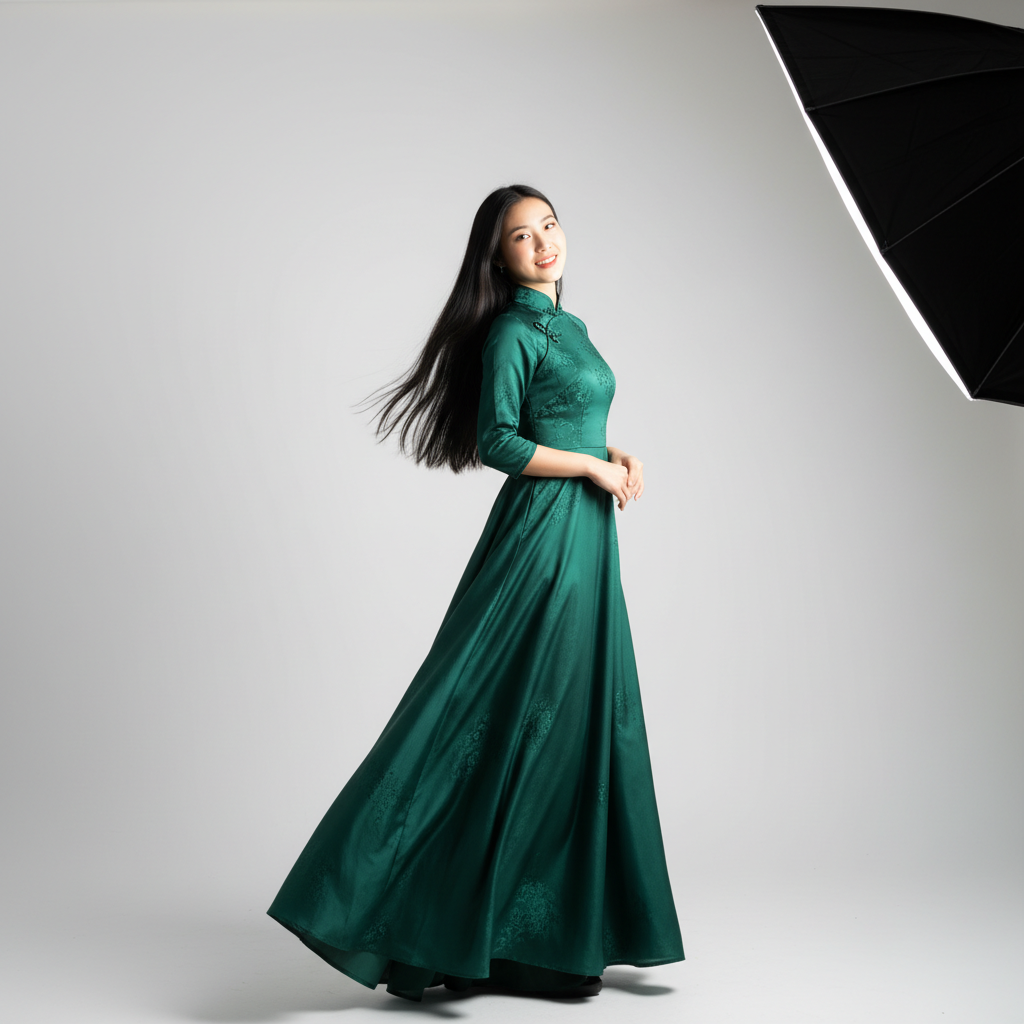
From Nano Banana to GeminiOmni: How Google's Gemini Stack Is Eating the AI Image-to-Video Pipeline
Six months ago, a model nicknamed **"Nano Banana"** appeared on the LMArena image leaderboard and refused to lose. It edited photos with a precision that made every other model look like it was guessing. When Google finally pulled back the curtain, Nano Banana turned out to be the image core of **Gemini 2.5 Flash**, and the AI image editing market quietly reorganized itself around it overnight.
Now the same thing is happening to video.
A new platform called **GeminiOmni** is doing for AI video what Nano Banana did for AI image editing: collapsing a five-tool workflow into a single chat box, raising the output ceiling to native 4K, and treating audio, motion, and continuity as first-class citizens instead of bolt-ons. The image-to-video pipeline that creators stitched together from Midjourney, Runway, ElevenLabs, and CapCut a year ago is being eaten by one stack. This is what that shift actually looks like in practice, and what it means if you make things on the internet.

1. The Nano Banana Moment, Briefly Recapped
Before Nano Banana, "AI image editing" mostly meant masking a region and re-rolling the dice with a diffusion model. Tools could *generate*, but they could not really *edit*, because they did not understand the photo they were editing. The big leap of the Gemini 2.5 Flash image core was that the same model that generated the image also reasoned about it. You could say "make the jacket leather, keep her face exactly the same, change the background to a Tokyo crosswalk at dusk," and it would just do it. No masks. No second tool.
That single shift broke a lot of moats. Background removal tools, headshot generators, virtual try-on apps, ad creative platforms — none of them needed a model team anymore. They needed an API key. The Gemini image stack didn't kill them all on day one, but it made every one of them argue, for the first time, about *why they still existed*.
If you have ever used Nano Banana–style image editing on this site, you already know the feeling: the gap between "I imagined it" and "it's on my screen" shrunk from twenty minutes to twenty seconds.
Video was supposed to be safe from this for another year or two. It is not.
2. The Missing Piece: Why Video Was Always Going to Be Next
Video is harder than image for three honest reasons.
- **Temporal consistency.** A character has to be the same character in frame 240 as in frame 1.
- **Motion physics.** Cloth has to move like cloth, water like water, hair like hair.
- **Synchronized audio.** Foley, dialogue, and ambient sound have to land on the right frames, or the brain rejects the whole clip.
Every public AI video model from 2024 to early 2026 was good at one of these and weak at the other two. Sora gave you cinematic motion but no real audio. Runway gave you fast iteration but capped at 1080p and short durations. Open-source video models gave you control but melted faces every fifth frame. Creators ended up running a pipeline: generate stills in one tool, animate them in another, dub audio in a third, color-grade in a fourth. The "AI video workflow" was really five workflows in a trench coat.
The Gemini stack was always positioned to swallow that pipeline because it was multimodal from day one. The same transformer that read your prompt could see the previous frame, hear the dialogue track, and reason about whether the cape was moving the right way. Once that capability matured enough to render natively at 4K, the multi-tool pipeline stopped being inevitable and started being a habit.
That is the door GeminiOmni walked through.
3. Enter GeminiOmni
GeminiOmni is the first creator-facing platform to ship the full Gemini-style video stack as one product. It is not a wrapper. It is a unified system that takes text, an image, or another video as input and returns finished, sound-designed footage at resolutions that used to require a render farm.
Three things make it qualitatively different from the previous generation of AI video tools.
Native 4K, Up to 120fps
Most "4K" AI video in 2025 was upscaled. The model rendered at 720p or 1080p and a separate pass stretched it out. GeminiOmni ships native 4K AI video generation at up to 120 frames per second, which means slow-motion that actually looks like slow-motion instead of a flipbook. For commercial work — ads, product demos, music videos — this is the line between "AI b-roll" and "shootable footage."
Director's Mode and World-State Memory
The platform exposes camera controls — focal length, dolly, crane, push-in — the way a director's chat with a DP would. More importantly, it carries a persistent world-state across shots, so a character's jacket, a prop on a table, or the layout of a room stays consistent between cuts. This is the single most underrated feature in the space. Temporal consistency *within a clip* is table stakes by now. Consistency *across clips in the same project* is what finally lets AI video tell a story longer than a TikTok loop.
Synchronized Audio, Stitched Scenes
GeminiOmni generates Foley, dialogue, and ambient sound aligned to the frames the model produced — not pulled from a stock library afterward. It also stitches multiple ~30-second renders into sequences up to two minutes long while keeping continuity. Two minutes is the length of a real ad, a music video verse, a game cinematic. It is also the length at which "AI clip" stops being a curiosity and becomes a deliverable.
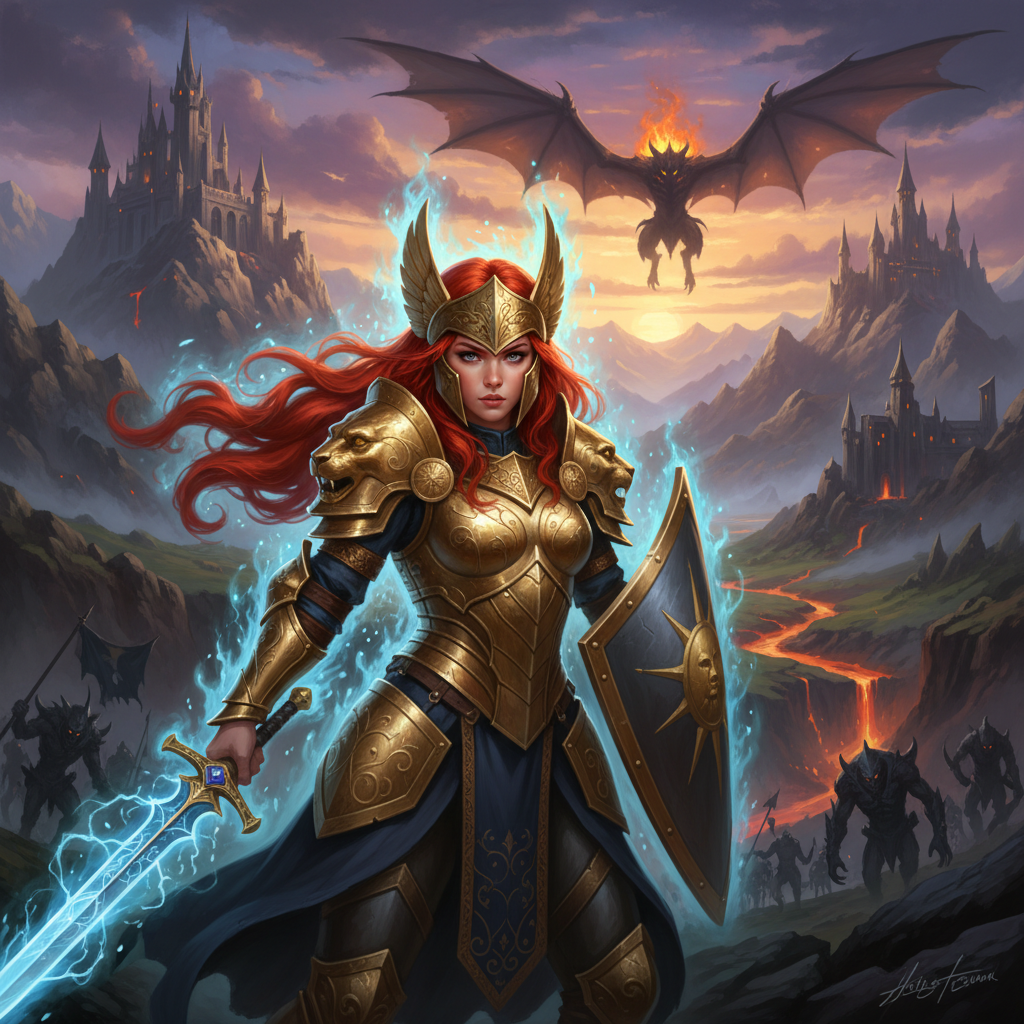
4. The New Image-to-Video Workflow
Here is what the workflow looks like once Nano Banana and GeminiOmni are both in your toolbelt. The pipeline that used to span five tabs collapses into two.
- **Step 1 — Generate or edit your hero frame.** Use Nano Banana–powered image editing on this site to lock in the character, the lighting, the wardrobe, the world. Iterate fast. The model holds the face stable while you change everything else.
- **Step 2 — Pick the moment you want to extend.** Choose the still that already tells the right story in one frame. The better your hero frame, the better every second of video downstream.
- **Step 3 — Import it into GeminiOmni's text-to-video flow.** Drop the image, describe the motion ("she turns toward the camera, neon flickers, light rain begins"), pick a camera move, choose a duration. Hit render. You can import it into GeminiOmni's text-to-video flow directly — no intermediate conversion, no second model for upscaling.
- **Step 4 — Stitch and score in-chat.** Use Director's Mode to chain the next shot. The world-state carries over: same character, same wardrobe, same room. Audio lands automatically.
- **Step 5 — Export at 4K.** Ship it.
The total number of separate tools in this workflow is two. The total number of file format conversions is zero. The total number of "fix it in post" steps for face drift, motion artifacts, or audio sync is, in practice, also close to zero. That is what "Gemini stack eating the pipeline" actually means at the workflow level.
5. What This Means for Creators, Studios, and Tool Builders
Different audiences should read this shift differently.
**If you are an independent creator,** the cost of producing studio-quality video just collapsed by roughly an order of magnitude. A music video that needed a director, DP, gaffer, colorist, and a week of post can now be storyboarded by one person on a Tuesday. The bottleneck shifts from production capacity to taste. Pick projects where your taste is the moat.
**If you run a small studio or agency,** the right reaction is not to lay off the team — it is to triple the throughput. Agencies that previously delivered one ad concept per pitch can now deliver six. The agencies that win the next two years will be the ones whose creative directors get good at this stack first, not the ones who refuse to touch it.
**If you build AI tools,** the strategic question is the same one Nano Banana forced on image-editing startups last year: *what do you do that the Gemini stack doesn't?* The answers that survive are usually one of three things — a vertical workflow the general platform won't bother with (real estate listings, e-commerce on-model photography, product packshots), a distribution channel the platform doesn't own (a TikTok-native editor, a Shopify app), or a data moat the platform can't replicate (your customers' brand assets, signed talent likeness rights, proprietary character IP).
Generic "AI video editor" wrappers are going to have the same year that generic "AI image editor" wrappers had in 2025. Plan accordingly.
6. Where the Edges Still Are
This is not "AI video is solved." The honest limitations as of mid-2026:
- **Hands and faces under fast motion** still occasionally break, especially in dance and sports footage.
- **Two-minute scene stitching is the current ceiling** — feature-length narrative AI film is still a 2027 conversation.
- **Brand and likeness rights** are unresolved in most jurisdictions; do not generate real people without their permission, and do not assume your platform's TOS protects you if you do.
- **Cost.** Native 4K rendering at 120fps is computationally serious. Even at GeminiOmni's most generous tier, heavy users will hit credit limits.
These are tractable problems, not foundational ones. A year from now, the limits will have moved.
7. The One-Line Version
Nano Banana ate AI image editing by being the first model that *understood* the image it was editing. GeminiOmni is doing the same to AI video by being the first platform that understands the *story* it is generating — across frames, across shots, and across the soundtrack. The image-to-video pipeline is now two tools, not five. If you make things, you should have hands on both.
The image side is on this site. The video side is at https://geminiomni.tech.